The streamlined practice for neurodivergent therapists
Systems and tools to reduce admin load, manage sensory needs and energy swings for neurodivergent therapists, with UK GDPR‑compliant practice features.

Running a therapy practice can be challenging, especially for neurodivergent therapists who often face difficulties with executive function, sensory sensitivities, and fluctuating energy levels. These challenges can reduce efficiency by up to 40% and lead to higher burnout rates compared to neurotypical peers. However, tailored tools and systems can help manage these hurdles effectively.
Key takeaways:
- Challenges: Administrative tasks, sensory overload, and variable energy levels can disrupt operations and increase stress.
- Solutions: Visual organisation tools, automated workflows, and accessible platforms simplify scheduling, note-taking, and client communication.
- Example Tool: Konfidens combines scheduling, AI-assisted notes, and secure record-keeping, reducing mental strain and improving efficiency.
Common Challenges for Neurodivergent Therapists
Neurodivergent therapists often encounter specific hurdles in their professional lives that require thoughtful and tailored approaches.
Executive Function and Task Management Difficulties
Managing the day-to-day operations of a therapy practice can be particularly challenging for neurodivergent therapists due to executive function difficulties. Tasks like scheduling clients, preparing for sessions, and handling billing can quickly become overwhelming. Estimating how long tasks will take or transitioning smoothly between administrative duties and therapy sessions often proves tricky. For example, misplacing important paperwork or digital files can delay processes and even jeopardise compliance with HCPC registration requirements or insurance claims with providers like Bupa [2]. Forgetting to send UK GDPR-compliant invoices via BACS transfers or missing deadlines for administrative tasks can lead to overlapping appointments, reduced billable hours, and increased stress levels [2]. These challenges are further complicated by the sensory and organisational demands of administrative work.
Administrative Work and Sensory Processing
Repetitive administrative tasks can be particularly taxing for therapists with sensory processing differences. Activities such as data entry, note-taking, and managing phone alerts can lead to sensory overload, especially when combined with prolonged screen time or disruptive office environments. The constant noise of typing or the harsh glare of fluorescent lighting, for instance, can trigger meltdowns and sap energy that might otherwise be directed towards client care. Many practitioners in the UK note that these sensory strains detract from their ability to focus on their strengths, such as creating engaging interventions or using visual aids to support clients [2]. Additionally, the time spent on non-billable administrative work can further disrupt consistency in scheduling, which brings its own set of challenges.
Variable Energy Levels and Scheduling
Energy fluctuations are a common experience for neurodivergent therapists, often characterised by periods of intense focus followed by exhaustion. These shifts can make it difficult to maintain a fixed appointment schedule, leading to cancellations, overbooking, and ultimately, irregular income and dissatisfied clients. The stress of adhering to a rigid timetable can also contribute to burnout and financial instability. Some therapists have found that offering flexible options, like online sessions or home visits, can help accommodate these energy variations. However, without the support of automation tools or other systems, even these adjustments may not fully alleviate the challenges [2][3][4].
Key Principles for Neurodivergent Practice Management
Effective practice management for neurodivergent therapists involves creating systems that align with how their brains naturally function. This approach embraces neurodiversity by focusing on environmental and societal adjustments rather than trying to change the individual. It encourages self-acceptance while fostering personalised strategies that work with natural tendencies [2].
Working with Your Strengths and Reducing Mental Load
Neurodivergent therapists often excel in hyperfocus and pattern recognition, which can significantly enhance practice management when used effectively. Hyperfocus allows for deep engagement with clients and complex cases, while pattern recognition aids in quickly identifying therapeutic trends. To make the most of these strengths, uninterrupted blocks of time should be scheduled for high-focus tasks, and pattern-based templates can streamline session planning, reducing decision fatigue. Experts in neurodiversity-affirming practices highlight that optimising workspaces and routines to suit individual tendencies can cut cognitive load by 20–30% [2, 11].
Routines are a game-changer. Neurodiversity coaches suggest starting with three essential routines: morning planning, end-of-day reviews, and weekly audits. Dr Silke Newman advocates for adapting environments to neurotypes, incorporating visual aids and flexible structures to support strengths like hyperfocus [2, 4, 11]. Breaking tasks into manageable 15-minute slots can prevent overwhelm, while pre-set session structures reduce the number of decisions therapists need to make throughout the day. Visual organisation strategies, such as colour-coded systems, further ease mental strain.
Visual Organisation and Simple Tools
Effective systems aren’t just about reducing cognitive load - they also need to be practical. Tools like Kanban boards and colour-coded calendars help break tasks into clear, visible steps, which reduces the demands on working memory. In fact, UK neurodiversity specialists have noted that these visual organisers can significantly improve task completion by externalising memory [6]. Platforms like Konfidens integrate such tools with features like dashboards and automatic saving of session notes, eliminating the need to remember to save work manually.
As clinical psychologist Per G. shared: "The first time I wrote a note I looked for the save button. But then I realised everything is saved automatically. Love it!" [1].
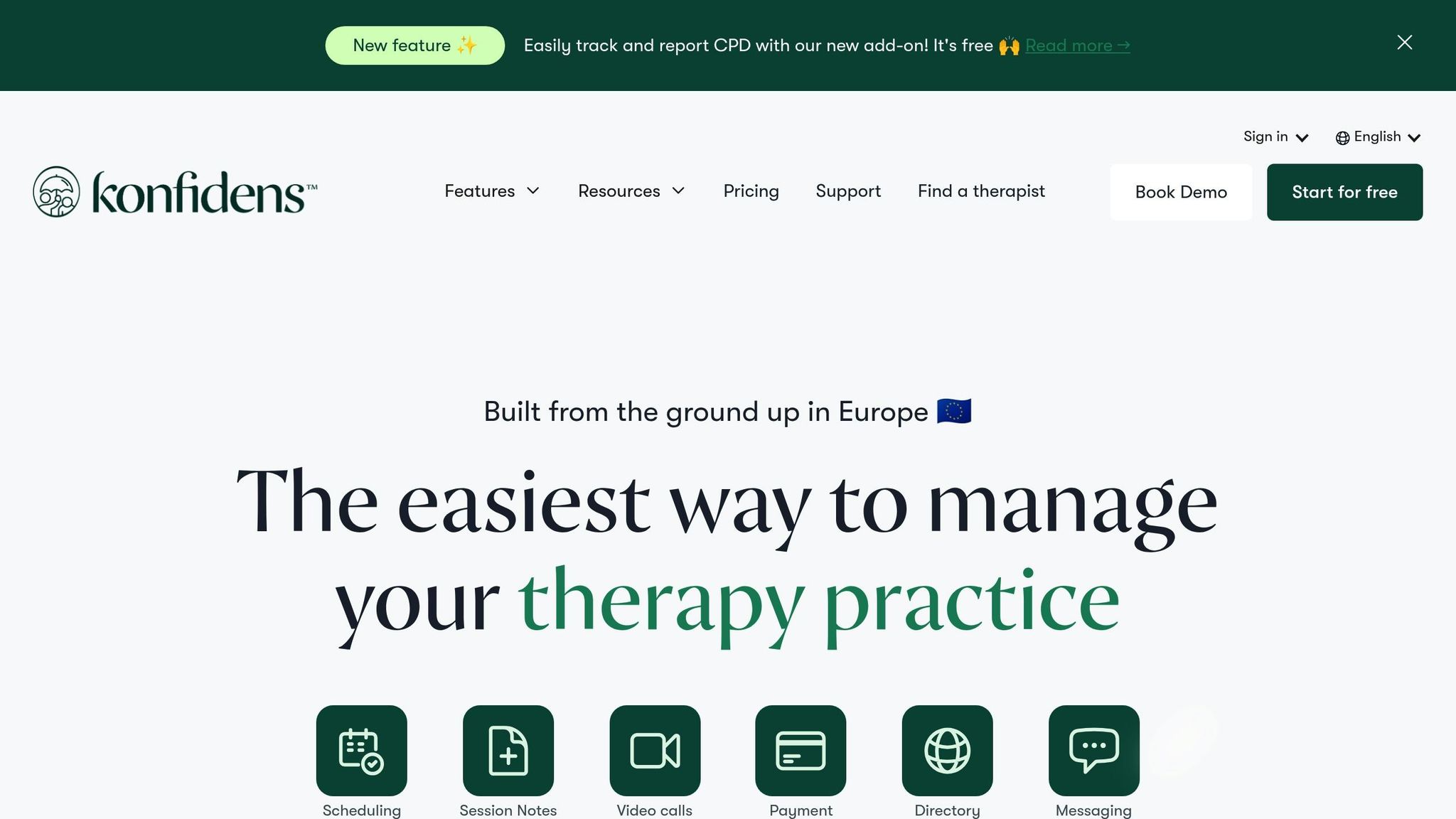
Konfidens simplifies practice management by consolidating scheduling, session notes, video calls, payments, and messaging into one cohesive system. This eliminates the hassle of juggling client information across notebooks, spreadsheets, emails, and paper diaries.
UK GDPR Compliance and Accessible Design
While simplifying systems is crucial, safeguarding client data is equally important. UK GDPR compliance ensures that sensitive client information is handled securely, helping therapists avoid fines of up to 4% of annual turnover while building trust with clients [5]. Compliant platforms must offer features such as encrypted storage, audit trails, and data minimisation.
Beyond legal requirements, accessibility features are especially beneficial for neurodivergent therapists. High-contrast interfaces, customisable dashboards to minimise sensory overload, keyboard navigation for those with motor challenges, and text-to-speech functions for reviewing notes all make daily tasks more manageable. UK psychotherapists have emphasised how these features support fluctuating energy levels, allowing for quick and low-effort access to essential tasks [5, 10]. Konfidens incorporates these thoughtful design elements while adhering to the UK’s strict privacy, health data, and cybersecurity standards [1].
How Konfidens Supports Neurodivergent Therapists
Konfidens Pricing Plans Comparison for Therapists
Konfidens combines scheduling, session notes, video calls, and payment collection into one easy-to-use platform, specifically designed to ease the administrative challenges often faced by neurodivergent therapists. By keeping everything centralised, with features like automatic saving and clear visual layouts, it transforms practice management into a more manageable and efficient process.
Automated Scheduling and Appointment Reminders
Konfidens simplifies appointment management with its online booking system, which integrates directly with your calendar. This eliminates the need for endless email exchanges, saving time and reducing the mental load of manual scheduling. To keep things running smoothly, the platform also sends automated SMS and email reminders to clients, helping to minimise missed appointments. SMS reminders are priced at £0.15 per message on the Solo plan and £0.07 per message on the Pro plan (excluding VAT).
The calendar syncs seamlessly with Google Calendar and iCal, offering colour-coded timelines and drag-and-drop rescheduling. These visual tools can be especially helpful for neurodivergent therapists who excel at recognising patterns and organising visually.
In addition to scheduling, Konfidens addresses the often time-consuming task of clinical documentation.
AI-Assisted Notes and Secure Record Keeping
With AI-assisted note-taking, Konfidens transcribes sessions in real time and creates structured summaries from voice input. According to user feedback, this feature can cut note-taking time by up to 70%, significantly reducing cognitive strain. All records are encrypted end-to-end on UK-based servers, ensuring compliance with UK GDPR and ICO guidelines.
The platform also includes tools to simplify compliance management, such as a dashboard that visually tracks compliance status, role-based access controls, and audit logs. Automatic backups and scheduled data deletions further streamline record-keeping, letting therapists focus on their clients instead of paperwork.
Konfidens Pricing Plans for Different Practice Sizes
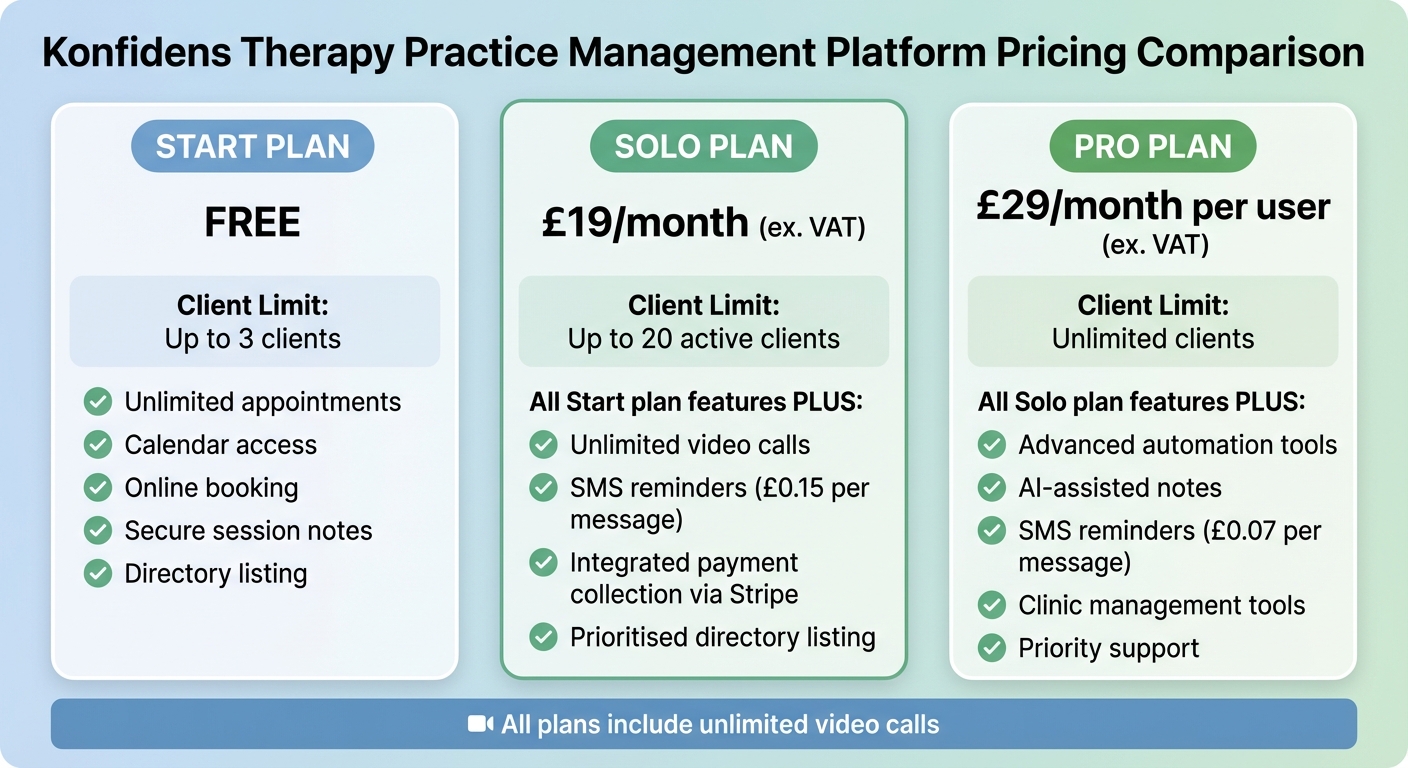
Konfidens offers flexible pricing plans to accommodate practices of all sizes:
- Start plan: Free of charge, this plan supports up to 3 clients and includes unlimited appointments, calendar access, online booking, secure session notes, and a directory listing.
- Solo plan: For £19 per month (ex. VAT), this plan supports up to 20 active clients and adds features like unlimited video calls, SMS reminders (£0.15 per message), integrated payment collection via Stripe, and a prioritised directory listing.
- Pro plan: At £29 per month per user (ex. VAT), this plan is designed for larger practices. It includes unlimited clients, advanced automation tools like AI-assisted notes, SMS reminders at a lower rate (£0.07 per message), clinic management tools, and priority support.
All plans include unlimited video calls, removing any concerns about call limits and helping therapists manage their schedules without added stress. These options allow neurodivergent therapists to choose a plan that fits their needs, enabling them to grow their practice at their own pace.
sbb-itb-0b4edca
Creating Custom Workflows with Konfidens
Automating Repetitive Tasks
Konfidens takes the hassle out of administrative tasks by automating processes like sending appointment confirmations, reminders, and invoices as soon as a client books a session. For instance, confirmations include session details in the DD/MM/YYYY format and a calendar invite, ensuring clients have all the necessary information. Automated reminders are sent 24 hours and 1 hour before appointments, so you don’t have to spend time on manual follow-ups.
Invoices are generated automatically after each session, simplifying payment tracking and reducing the need for constant context-switching. This means you can dedicate more time to therapy itself. You can even create workflows to send consent forms before a client’s first session, establishing a consistent and predictable process. With this automation in place, it becomes easier to integrate proven productivity strategies into your routine.
Combining Konfidens with Productivity Methods
Once automation takes care of repetitive tasks, you can enhance your workflow further by incorporating productivity techniques. For example, the Pomodoro technique - working in focused 25-minute intervals followed by 5-minute breaks - can be paired with Konfidens' session timer and notifications. This structured approach helps manage energy levels and reduces cognitive strain, especially during post-session tasks.
For additional focus and motivation, consider scheduling virtual co-working sessions with a colleague or accountability partner. These sessions mimic the supportive environment of working alongside others, which many neurodivergent therapists find helpful for tasks like reviewing session notes or processing invoices. This combination of automation and productivity methods can make administrative work feel less burdensome.
Upcoming Konfidens Features
Konfidens is set to expand its automation and productivity tools with several exciting updates planned for Q1 2026. Among these is integrated psychometric testing, allowing you to automatically distribute ADHD self-assessments and receive visual reports ready for review. Additionally, automated feedback collection will enable you to gather post-session client feedback effortlessly, with insights displayed in dashboards that can be exported in CSV format using UK number formatting (e.g., 1,234.56).
Other upcoming features include couples and group journaling, making it easier to document sessions involving multiple clients without needing separate records for each individual. The deliberate practice tool will allow you to securely record therapy sessions and, if needed, share access with supervisors. These new tools aim to further reduce manual administrative work while adhering to UK GDPR standards and maintaining user-friendly design principles.
Conclusion
Running a private practice as a neurodivergent therapist doesn’t have to feel like a constant uphill battle. By developing systems that align with your strengths, you can address challenges like executive function difficulties, sensory overload from admin work, and fluctuating energy levels. The right tools can work in harmony with your neurotype, helping you stay efficient and maintain your well-being.
Konfidens offers a solution by combining scheduling, AI-assisted notes, automated reminders, and secure record-keeping into one platform. It’s designed to eliminate the chaos of juggling notebooks, spreadsheets, and constant task-switching, which can drain your mental energy.
Psychotherapist Kathleen K. shared: "I really appreciate this app so much! It's made my client work significantly easier" [1].
By automating repetitive tasks, you can free up more time for meaningful clinical work while maintaining a sustainable practice.
Exciting updates are also on the horizon. Features such as integrated psychometric testing, automated feedback collection, and tools for couples and group journaling will further simplify admin work - all while adhering to UK data protection standards. Whether your sessions are priced at £60 or £130, the time saved through automation can lead to greater income stability and a lower risk of burnout.
Choosing tools that align with the way your brain works can transform your practice. Konfidens offers plans tailored to practices of all sizes, with a free Start plan available for up to three clients.
Try it out today to create workflows that reduce admin stress and build a practice that supports both you and your clients.
FAQs
What strategies can neurodivergent therapists use to manage energy levels in their practice?
Neurodivergent therapists can better manage their energy by creating schedules that work with their natural rhythms. This might include setting flexible working hours and carving out time for rest and self-care. Tackling tasks in smaller, bite-sized steps and using visual aids like calendars or task boards can also help maintain focus while keeping stress levels in check.
Using practice management software to handle repetitive tasks - like sending appointment reminders or managing client communications - can free up energy for more meaningful work. Other practical strategies include taking regular breaks, adopting online booking systems, and simplifying session note-taking processes. These steps can make staying organised and productive feel far less overwhelming.
How does Konfidens help therapists manage admin tasks more efficiently?
Konfidens offers a variety of tools aimed at making administrative tasks easier for therapists. Features like an integrated calendar help with scheduling, while automated appointment reminders cut down on missed sessions. Plus, a secure online booking system allows clients to schedule appointments at their convenience.
Therapists can also take advantage of customisable session note templates, which automatically include client details to save time. Additionally, secure messaging and video call capabilities ensure smooth communication with clients. By combining these features with practice management tools, Konfidens minimises repetitive tasks, enabling therapists to dedicate more time to their clients rather than paperwork.
How does Konfidens protect client data and comply with UK GDPR regulations?
Konfidens places a strong emphasis on protecting client data, adhering strictly to UK GDPR regulations. All client information is encrypted and stored securely on servers within the EU, aligning with rigorous data protection and privacy standards.
Through advanced cybersecurity protocols, Konfidens ensures sensitive health data remains secure, fostering trust and maintaining strict confidentiality for both professionals and their clients.
Related Blog Posts